Key Takeaways
- Home electric service encompasses everything from the utility lines to your meter, main panel, circuit breakers, wiring, outlets, and safety devices—all working together to power your Palm Bay or Melbourne home safely.
- Homeowners experiencing flickering lights, frequent circuit breaker trips, or burning smells should call 321-674-9667 immediately for fast, professional residential electrical service.
- Our local electricians are fully licensed and insured, consistently maintaining a 5-Star Google Review rating for home electrical work throughout the Space Coast.
- Older Florida homes built before 1990 often need panel and wiring upgrades to safely handle modern electrical loads like EV chargers, smart home devices, and high-efficiency HVAC systems.
- Schedule regular electrical inspections, repairs, or emergency service by calling 321-674-9667—your safety and peace of mind depend on it.
Introduction to Home Electric Service
When you flip a switch or plug in an appliance in your Palm Bay or Melbourne home, you’re relying on a complex system that starts miles away and ends at the outlets on your walls. Home electric service is the complete pathway that brings power from Florida Power & Light (or your local utility) through a network of transformers, overhead or underground lines, and into your residence via the electric meter mounted outside your home.
The term “home electric service” covers far more than just the wires coming into your house. It includes the meter that measures your consumption, the main service panel (often called the breaker box), all the circuit breakers that protect individual circuits, the interior wiring running through your walls, every outlet and switch, and critical safety devices like ground fault circuit interrupters and smoke detectors. Together, these components form your home’s electrical system—the backbone of modern living.
Living along Florida’s Space Coast presents unique challenges for electrical systems. Humidity accelerates corrosion on outdoor panels and connections. Summer storms bring lightning surges that can damage sensitive electrical devices. Salt air near the coast eats away at metal components faster than in inland areas. These conditions make professional maintenance not just helpful but essential for homeowners in Palm Bay, Melbourne, West Melbourne, and surrounding communities. For reliable service from a licensed electrician who understands local conditions, call 321-674-9667 or visit Cornelius Electric.
Basics of Home Electric Service
Understanding how power reaches your home helps you make better decisions about maintenance, upgrades, and safety. Here’s a straightforward look at how home electricity flows from the utility grid into your Brevard County residence.
From Power Lines to Your Home
Electricity travels from neighborhood transformers—either mounted on poles or housed in ground-level boxes—through service conductors that connect to your home. In many Palm Bay and Melbourne neighborhoods, you’ll see overhead service drops extending from utility poles to a weatherhead on the roof or side of the house. Newer subdivisions often use underground service laterals buried beneath the yard.
These conductors typically include two 120-volt wires and one neutral wire. The utility company maintains the infrastructure up to a certain point, but the connections at your home become your responsibility. An experienced professional electrician can evaluate these connections to ensure they’re safe and functioning properly.
For more information on how electricity is delivered to homes, you can visit the U.S. Energy Information Administration (EIA).
The Electric Meter
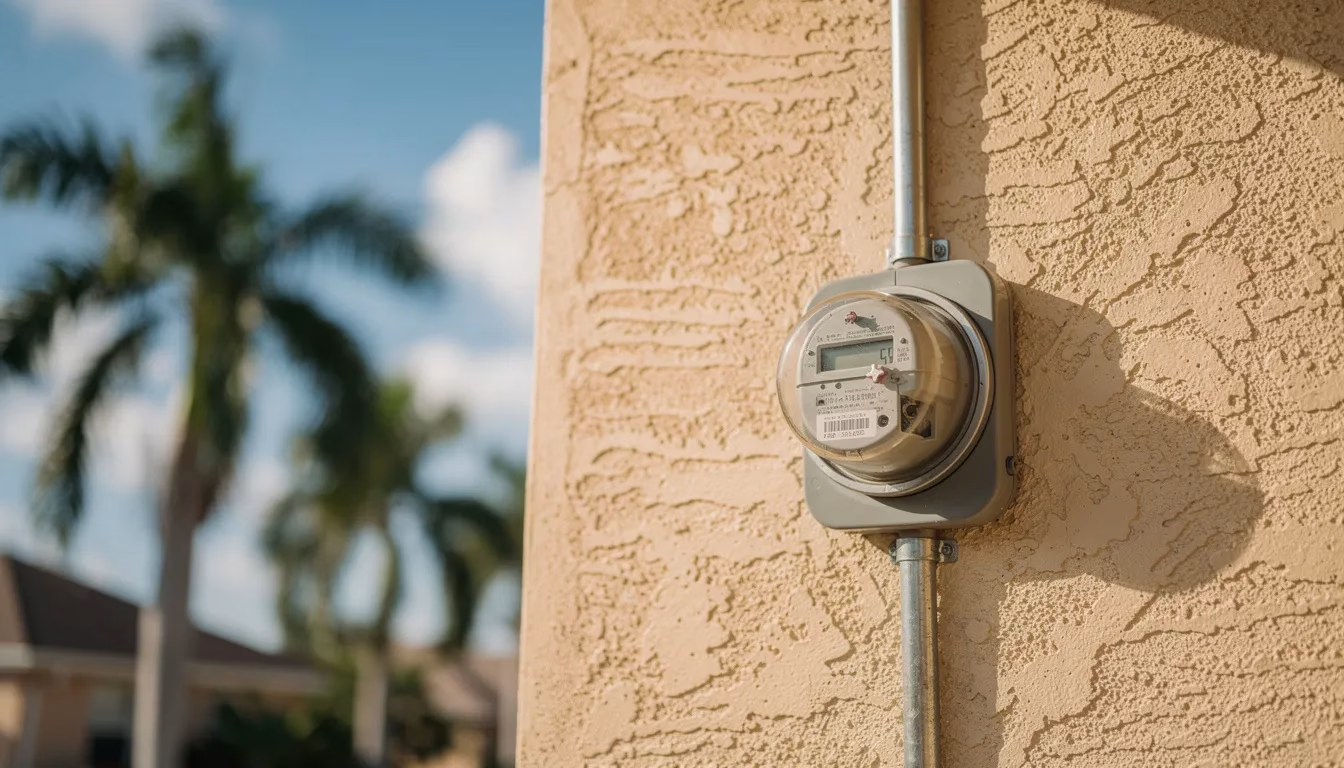
Mounted on the exterior of your home, the electric meter measures all the electricity consumed in your household in kilowatt-hours (kWh). This measurement determines your monthly utility bill. The meter belongs to the utility company and is protected by law—tampering with it is extremely dangerous and illegal.
Electric Meter Components and Functions
Meter Component | Function |
|---|---|
Display | Shows current usage reading |
Dial or Digital Counter | Records cumulative kWh consumed |
Utility Seal | Prevents unauthorized access |
Main Service Panel and Disconnect
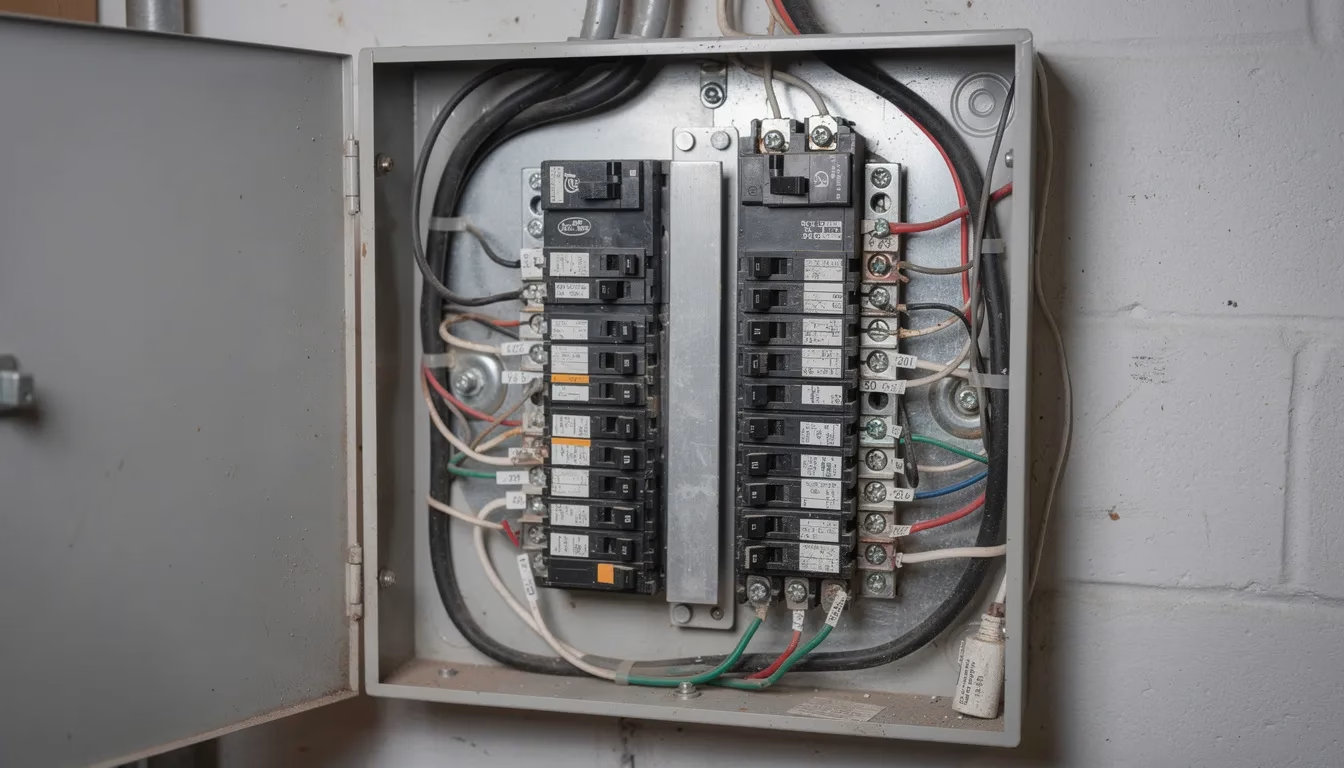
From the meter, power flows to your main service panel—the central hub that distributes electricity throughout your home. This panel contains the main breaker, which controls all the power flowing into your house, plus individual circuit breakers for different areas and appliances.
Panel sizes in Florida homes vary depending on age:
- Older homes (pre-1980): Often 60-100 amp service
- Homes from 1980-2000: Typically 100-150 amp service
- Newer homes and upgrades: 150-200 amp or higher, especially for homes with EV chargers or multiple large appliances
The main breaker allows you to shut off power to the entire home during emergencies or before major electrical work.
Circuit Breakers and Overload Protection
Circuit breakers serve as the safety gatekeepers of your electrical system. When too much electrical current flows through a circuit—say, when you run a microwave and toaster on the same kitchen circuit—the breaker trips, cutting power to prevent overheated wiring and electrical fires.
Each circuit breaker has an amperage rating that matches the wire size and expected load for that circuit. A tripped circuit breaker isn’t just an inconvenience; it’s a warning sign that something exceeded safe limits.
Learn more about circuit breakers and their function at Electrical Safety Foundation International (ESFI).
Grounding and Bonding
Grounding provides a safe path for fault current to travel into the earth rather than through you or your electrical devices. In most Florida homes, this involves a grounding rod driven into the soil or a connection to a metal water pipe. Bonding connects all metal components of the electrical system together, ensuring that any stray current has a clear path to ground.
This safety feature protects people and equipment from shock and reduces the risk of electrical fires from faulty wiring.
Understanding Your Home Electrical System
Your home’s electrical system works like an organized network, with the service panel as the central command center and branch circuits extending like roads to every room and appliance.
Main Components at a Glance
The pathway of power through your home includes several key stages:
- Service drop or lateral – Brings power from utility lines
- Electric meter – Measures consumption
- Main service panel – Distributes power and houses breakers
- Branch circuits – Individual lines to rooms and appliances
- Switches, outlets, and fixtures – Points of use throughout the home
Room-by-Room Circuit Needs
Different areas of Palm Bay and Melbourne homes have different electrical needs. Kitchens require dedicated circuits for refrigerators, dishwashers, and countertop outlets where small appliances plug in. Bathrooms need ground fault circuit interrupter protection near sinks and showers. Garages often have specialized outlets for power tools and potential EV chargers.
Florida-specific areas like lanais, pool equipment rooms, and outdoor kitchens demand weather-resistant components and additional GFCI protection due to moisture exposure.
Dedicated 240-Volt Circuits
Larger appliances can’t run on standard 120-volt circuits. These high-demand items require dedicated circuits that use both hot wires to deliver 240 volts:
- Central air conditioning systems
- Electric dryers
- Electric ranges and ovens
- Tankless water heater units
- Home EV charger installations
- Pool heaters and large pumps
Running too many appliances on undersized circuits leads to frequent electrical problems and safety risks.
Modern Code Requirements
Current electrical codes require AFCI (Arc Fault Circuit Interrupter) and GFCI protection in specific locations throughout the home. Many homes built before about 2008 lack these safety features. If your Palm Bay or Melbourne home was built earlier, upgrading electrical panels and adding these protective devices significantly reduces the risk of electrical fires and shock.
You can read more about electrical code requirements on the National Fire Protection Association (NFPA) website.
Warning Signs to Watch For
Pay attention to these symptoms that indicate potential hazards in your electrical system:
- Flickering lights when appliances turn on
- Buzzing sounds from switches or outlets
- Outlets or switch plates that feel warm to the touch
- Burning smells near electrical components
- Discolored outlet covers
If you notice any of these issues, avoid using the affected circuit and contact a licensed electrician immediately. These symptoms can indicate serious hazards that require professional diagnosis.
Assessing Your Home’s Electrical Needs
Whether you’re planning significant renovations or simply wondering if your home can handle a new hot tub, understanding your electrical load helps you avoid problems before they start.
Estimating Your Electrical Load
Typical Appliance Wattages
Typical Wattage | |
|---|---|
Central AC (3-ton) | 3,500-4,000W |
Electric water heater | 4,500W |
Pool pump electrical emergencies can occur unexpectedly—learn more about how Cornelius Electrical handles circuit breaker crises quickly and professionally. | 1,500-2,500W |
Electric range | 8,000-12,000W |
EV charger (Level 2) | 7,200-9,600W |
Refrigerator | 100-400W |
When multiple appliances run simultaneously, demands stack up quickly. Older 100-amp service panels often can’t keep up with modern power needs.
Amperage Capacity: 100A vs. 200A
Homes with EV chargers, hot tubs, large workshops, or pool equipment in Palm Bay or Melbourne frequently need more than the original service capacity. A 200-amp panel provides double the capacity of a 100-amp panel and allows room for future additions.
Signs your electric service is undersized or stressed include:
- Frequent circuit breaker trips
- Lights dimming when the AC starts
- Reliance on multiple extension cords and power strips
- Warm or hot breaker panel covers
- Inability to run multiple appliances simultaneously without problems
Homes That Need Evaluation
Certain situations call for a comprehensive electrical evaluation:
- Pre-1980 construction: Wiring materials and methods from this era may not meet safety standards
- Recent major load additions: Solar panels, whole home generators, or EV chargers change your electrical needs significantly
- Planned renovations: Adding living space, outdoor kitchens, or workshops requires proper circuit planning
- Insurance or sale requirements: More frequent inspections may be needed for older properties
Professional Load Calculation
Before major renovations or adding significant new appliances, schedule a professional load calculation and safety inspection. This analysis determines whether your current service can handle additional demands or if service upgrades are necessary.
Homeowners throughout Palm Bay, Melbourne, and surrounding areas can call 321-674-9667 to schedule this important evaluation. Understanding your electrical needs before starting projects prevents costly surprises and ensures safety.
Upgrading and Maintaining Home Electric Service
Many Florida homes built during the 1960s through 1980s are reaching a point where electrical systems need serious attention. What worked for a three-bedroom home with a window AC unit simply can’t support today’s power needs.
Why Older Homes Need Upgrades
Homes in Palm Bay, Melbourne, and Satellite Beach from earlier decades often have:
- Undersized 60-amp or 100-amp panels
- Limited circuit availability
- Outdated wiring materials
- Missing safety features like GFCI and AFCI protection
- Panels from manufacturers with known reliability issues
Modern families use far more electrical devices than homeowners did 40-50 years ago. Between computers, entertainment systems, kitchen appliances, and climate control, electrical demands have multiplied.
Panel Upgrade Process
Upgrading electrical panels, especially if you have obsolete electrical panels, typically involves:
- Replacing the existing panel with a larger unit (150-200 amp or higher)
- Installing new circuit breakers sized appropriately for each circuit
- Adding space for future circuits like dedicated circuits for EV chargers or outdoor kitchens
- Updating grounding and bonding to meet current electrical codes
- Ensuring proper labeling for all circuits
This work requires permits and inspections from local building authorities in Brevard County.
When Rewiring Is Necessary
Full or partial rewiring becomes necessary in certain situations:
- Discovery of aluminum branch circuit wiring (common in 1960s-70s construction)
- Brittle, cracking wire insulation that poses a fire hazard
- Ungrounded two-prong outlets throughout the home
- Evidence of previous faulty wiring or DIY electrical work
- Damage from water intrusion, rodents, or age
Rewiring is a significant investment but eliminates hidden safety risks and code violations.
Routine Maintenance Tasks
Routine Electrical Maintenance Tasks and Frequency
Task | Frequency |
|---|---|
Test GFCI outlets | Monthly |
Check for warm outlets/switches | Monthly |
Test smoke detectors | Monthly |
Inspect outdoor panels for rust/corrosion | Quarterly |
Professional inspection | Every 3-5 years |
Code Compliance and Insurance
All electrical work must meet the current National Electrical Code and local Brevard County requirements. Work performed without proper permits can:
- Create hidden safety risks
- Void homeowner’s insurance coverage
- Cause problems when selling the home
- Result in fines from code enforcement
Using a licensed electrician protects both your safety and your investment. Equipment should be listed by a nationally recognized testing laboratory to ensure it meets safety standards.
For more on electrical safety and codes, visit the National Electrical Manufacturers Association (NEMA).
Energy Efficiency and Your Electric Service
In Palm Bay and Melbourne, where air conditioners run nearly year-round, smart electrical choices translate directly into lower utility bills and improved home comfort.
Why Efficiency Matters Here
Florida’s climate means HVAC systems account for a major portion of home energy costs. During peak months (typically May through October), electricity bills can spike dramatically. Efficient electrical installations and smart upgrades help control these costs while maintaining comfort.
High-Impact Efficiency Upgrades
Potential Annual Savings from Efficiency Upgrades
Upgrade | Potential Annual Savings |
|---|---|
LED lighting throughout | $100-200 |
Smart thermostat | $150-250 |
ENERGY STAR appliances | $50-150 per appliance |
Variable-speed pool pump | $300-500 |
High-efficiency HVAC | 20-40% cooling costs |
These improvements are cost effective over time and often qualify for utility rebates or tax incentives.
Learn more about energy efficiency programs at Energy.gov.
Understanding Your Electric Bill
Your Florida electric bill includes several components:
- Customer charge: Fixed monthly fee for service
- Energy charge: Cost per kWh consumed (tiered in some plans)
- Fuel charge: Varies with utility’s fuel costs
- Taxes and fees: Local and state additions
Comparing bills from high-use months to lower months (December through February) reveals where efficiency improvements will have the greatest impact on energy savings.
Advanced Monitoring and Protection
Modern options for controlling and protecting your electrical system include:
- Whole-home surge protection: Installed at the service panel to protect against lightning and power fluctuations—especially important on the Space Coast
- Smart panels: Allow remote monitoring and control of individual circuits
- Home energy monitoring systems: Track usage in real-time to identify waste
These systems help homeowners make informed decisions about power needs and identify potential hazards before they become problems.
Schedule an Efficiency Check
A professional electrical safety and efficiency check identifies opportunities for savings tailored to your specific home. Homeowners in the Palm Bay and Melbourne areas can call 321-674-9667 to schedule this evaluation and receive recommendations specific to their situation.
Professional Electricians for Palm Bay & Melbourne, FL Homes
Some electrical tasks—like changing light bulbs or resetting a tripped breaker—are simple enough for any homeowner. But anything beyond these basics requires the expertise of a licensed electrician to ensure safety and code compliance.
Why Hire a Licensed Professional
Electrical work isn’t just about making things function; it’s about making them function safely. A licensed, bonded, and insured electrician brings:
- Knowledge of current electrical codes and Brevard County requirements
- Proper tools and testing equipment
- Experience identifying potential hazards
- Insurance coverage protecting homeowners from liability
- Work that will pass inspection and maintain your home’s value
Improper electrical installations create serious hazards that may not appear for months or years—until they cause a fire or shock injury.
Our Space Coast Service Area
Our team provides comprehensive residential electrical services throughout:
- Palm Bay
- Melbourne
- West Melbourne
- Malabar
- Satellite Beach
- Indialantic
- Melbourne Beach
- And surrounding Space Coast communities
We handle the full range of home electrical needs, from routine maintenance and electrical repairs to panel upgrades, rewiring, EV charger installation, electrical inspections, and emergency service.
Our Commitment to Excellence
We’re proud to maintain a consistent 5-Star Google Review rating from homeowners throughout the Space Coast. This rating reflects our commitment to:
- Dependable workmanship that meets or exceeds code requirements
- Punctual service with respect for your time
- Clear communication about findings, options, and pricing
- Clean work areas and professional conduct
- Standing behind our work with appropriate warranties
Handling Planned and Emergency Work
Whether you’re planning electrical upgrades for a renovation or facing electrical emergencies like loss of power, sparking outlets, or storm damage, we respond promptly with solutions that protect your home and family.
Common emergency situations we handle include:
- Complete or partial power outages within the home
- Sparking or arcing outlets
- Burning smells from electrical components
- Storm-related damage to service equipment
- Water intrusion affecting electrical installations
Call Us Today
Ready to address your home’s electrical needs? Whether you need routine maintenance, are considering upgrading your panel, want a safety inspection, or face an urgent problem, we’re here to help.
Call 321-674-9667 to schedule same-day or next-day service, request an estimate, or arrange a comprehensive home electrical inspection. Our licensed electricians look forward to serving you.
For more about our services and to schedule, visit Cornelius Electric Residential Electrical Services.
Frequently Asked Questions
How often should I have my home’s electrical system inspected in Florida?
For homes built after 2000 in Palm Bay and Melbourne, schedule a professional electrical inspection every 3-5 years. Older homes—those 25-30 years or more—benefit from more frequent inspections, typically every 2-3 years. Additionally, inspections are essential after major renovations, adding new appliances like whole home generators or EV chargers, purchasing a home, or experiencing severe storms and lightning events common to the Space Coast.
An inspection catches developing problems before they become electrical emergencies. Call 321-674-9667 to book an inspection tailored to your home’s age and condition.
What are signs that my electrical panel needs to be replaced?
Watch for these warning signs that your electric service panel may need replacement:
- Frequent breaker trips that aren’t explained by obvious overloads
- Visible rust or corrosion on the panel cover or interior
- Panel cover that feels warm or hot to the touch
- Burning odor coming from the panel area
- Buzzing or crackling sounds from inside the panel
- A panel manufactured by brands with known safety issues
Panels older than 30-40 years, or those still using fuses instead of circuit breakers, often can’t safely support today’s electrical loads. Have a licensed electrician evaluate your panel before small problems escalate into fire hazards or power outages.
Is it safe to do my own electrical work at home?
Simple tasks like changing light bulbs, replacing a light fixture on an existing circuit (with power off), or resetting a tripped circuit breaker are generally safe for homeowners who take basic precautions.
However, panel work, installing new circuits, rewiring, and work in wet locations (kitchens, bathrooms, outdoors) should always be performed by a licensed electrician. Improper DIY wiring can:
- Create hidden fire and shock risks
- Void your homeowner’s insurance coverage
- Result in code violations that affect home sales
- Cause problems that don’t appear until years later
The safety risks simply aren’t worth it for complex electrical work.
What should I do if a breaker keeps tripping?
When a breaker trips repeatedly, follow these steps:
- Unplug some devices on the affected circuit to reduce the load.
- Push the breaker firmly to the full OFF position.
- Wait a few seconds, then switch it back to ON.
- Observe whether it holds or trips again immediately.
Repeated tripping indicates an overloaded circuit, a short circuit, or a faulty appliance. Never tape a breaker in place or force it to stay on—this defeats the safety protection and creates a fire hazard.
If the breaker trips again shortly after reset, call a licensed electrician to diagnose the cause. The problem could be the breaker itself, the wiring, or an appliance creating dangerous conditions.
Do I need surge protection for my home in the Space Coast area?
Florida leads the nation in lightning strikes, and the Space Coast experiences frequent storms from spring through fall. Power fluctuations from utility switching and storm damage add to the risk. Whole-home surge protection is a smart investment for Palm Bay and Melbourne homeowners.
A whole-house surge protector installs at your main service panel and helps protect:
- Sensitive electronics (computers, TVs, gaming systems)
- HVAC control boards and compressors
- Smart home devices and thermostats
- Appliances with electronic controls
- Pool and spa equipment
Point-of-use surge protectors at individual outlets add another layer of protection for your most valuable devices. Contact our team at 321-674-9667 to discuss whole-home surge protection options for your home.
For additional electrical safety tips, visit the Electrical Safety Foundation International.